

Children grow up earning ribbons at school field days, trophies for youth sports, certificates for perfect attendance, and the occasional shiny medal that made us feel larger than life. As adults, we’d like to believe we’ve outgrown all that. Those were for kids—right?
Not quite.
Hand an adult a distinguished trophy or an engraved bronze plaque, and watch what happens. Their eyes light up. They stand a little taller. And a familiar sense of pride makes its way across their face.
The reality is, adults—much like children—find tremendous value in being recognized.
So why do awards have such a powerful effect on us? Much of the answer lies in our psychology. That’s right, awards tap into the same emotional wiring that excited us when we were young.
Curious to learn more? Excellent. Here we go.
Awards Help Fulfill Our Most Basic Needs
If you’ve ever taken an intro psych course, the name Abraham Maslow might ring a bell. He’s the psychologist best known for creating Maslow’s Hierarchy of Needs—a framework that explains the categories of human needs that motivate behavior.
I’ll spare you a lengthy college-like lecture and provide a quick overview:
Maslow’s model is shown as a five-level pyramid. The lower levels relate to basic needs like survival and safety. As you move upward, each layer builds on the last, leading to the peak, which Maslow described as becoming “everything one is capable of becoming.”
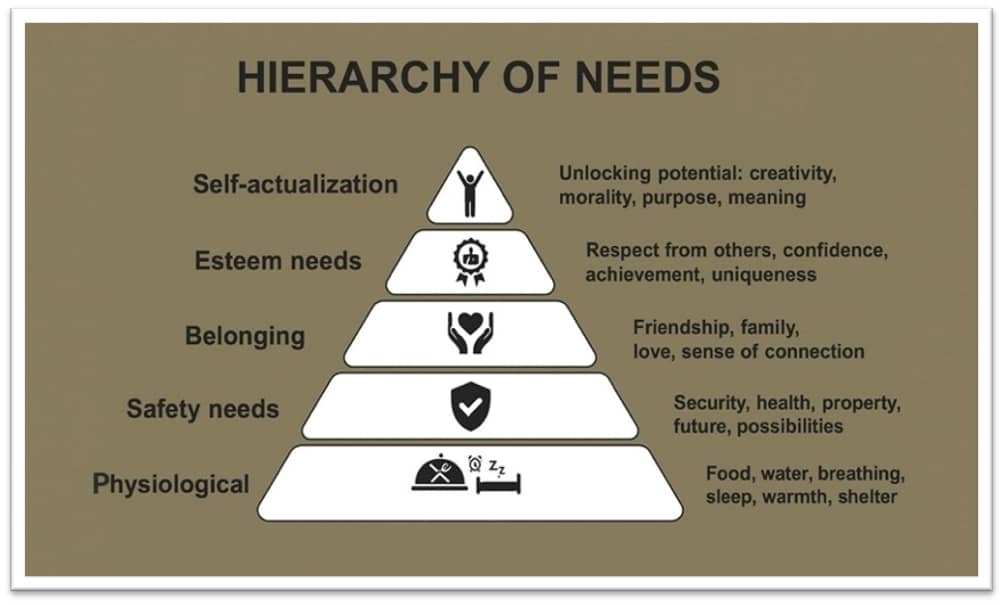
Let’s take a closer look at the top three levels—Belonging, Esteem, and Self-Actualization—where awards can come into play.
Belonging
Belonging is one of the strongest human motivators. We want to be truly seen, feel included, and part of something bigger than ourselves.
That’s why it only makes sense that being presented with an award carries so much weight. It tells you: “You’re valued. You matter here.”
Esteem
Maslow explains esteem as the desire to feel capable and confident.
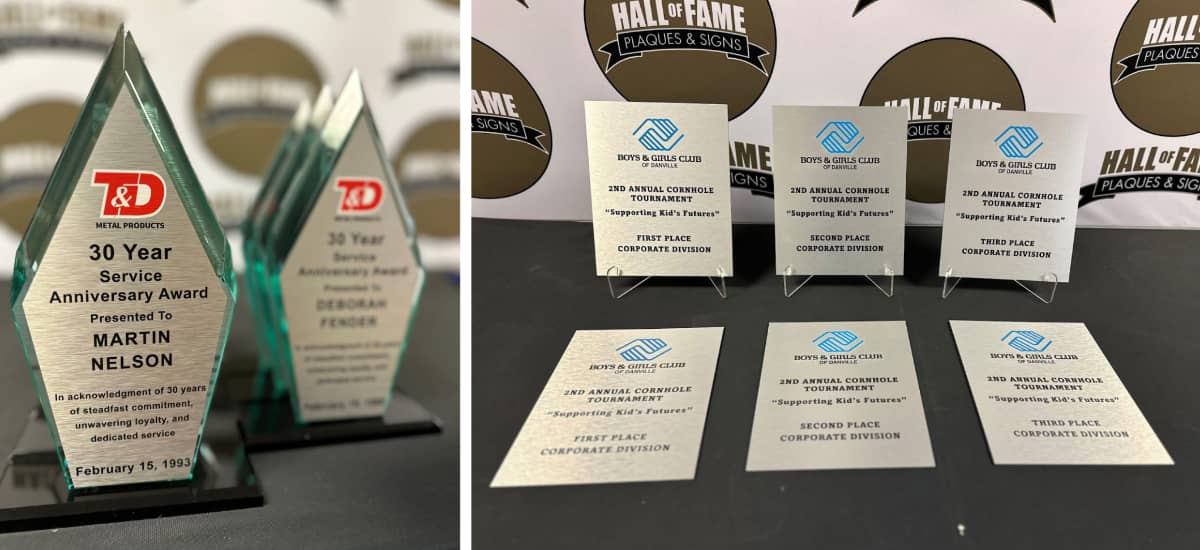
Receiving an award plays a part in satisfying this need by reinforcing competence. Whether it’s for corporate leadership, community service, or athletic achievement—they send a clear message: “You did something really well.”
That kind of validation boosts esteem unlike almost anything else.
Self-actualization
Self-actualization is all about fulfilling your potential and living with purpose. It’s the deeper meaning behind what drives us to do what we do.
Awards make that purpose visible—and, they’re a tangible reminder that your contribution made a memorable impact.
And for many people, that affirmation leads to even more growth.
The Broader Psychology Awards
Maslow introduced his model in the 1940s, yet its core principles remain relevant today.
Modern business leaders, coaches, educators, as well as organizational and sports psychology continue to use his model. Why? Because it’s a straightforward, practical way to understand how people thrive.
Research over the decades has expanded on Maslow’s work, revealing that the lower levels of the pyramid doesn’t necessarily have to be completely fulfilled to move to the next tier. For example, someone who may not have reliable shelter can still attain self-actualization. Humans are pretty incredible!
Motivation research, including the Self-Determination Theory by psychologists Edward Deci and Richard Ryan, has also shown that when people feel competent, integrated, and purposeful, they’re more motivated, more confident, and even happier.
Gallup studies back this up too: finding that people who feel appreciated on a regular basis are far more engaged in their workplace culture and dramatically more productive. It’s no wonder why we see so many awards in the corporate world.
To put it simply: recognition is scientifically tied to better performance. And what better way to applaud someone’s performance than with an award?
Why Goal-Oriented Personalities Thrive on Awards

Not everyone responds to awards the same way, but make no mistake, goal-driven personalities can be fueled by them. They enjoy pursuing milestones, tracking progress, and having something concrete to strive for.
For these individuals, awards create a clear path to a clear outcome: do this, and you’ll earn that. You can see this play out in:
- Business settings, where awards give shape to performance benchmarks
- Adult recreation leagues, where trophies and medals ignite competitive excitement
- Volunteer organizations, where recognition helps sustain participation
- Professional associations, where honors signify accomplishment
Given all this, it’s no surprise that goal-oriented individuals often describe awards as the “finish line” that keeps them focused and energized.
Putting it all Together
Awards bring out a sense of nostalgia in adults. They stir positive emotions by bringing back those childhood memories when our hard work was rewarded.
Although adults may be busy, stretched thin, and pulled in a dozen directions, a single visual reminder—sitting on a shelf or hanging on a wall—delivers a significant psychological lift.
Because whether we’re 8 or 80, we want to be appreciated, and to know that our efforts leave a mark. It’s not about ego—it’s about meaning, acknowledgment, and fulfillment.
And as we’ve learned, awards don’t just celebrate what happened. They shape what happens next. They boost our willingness to keep growing, improving, and stepping up again, strengthening the culture of teams, communities, and workplaces.
In the end, awards do far more than recognize success—they propel it to new heights.